Can Fatty Liver Turn Into Cirrhosis? Understanding the Risks
Can Fatty Liver Turn Into Cirrhosis? Understanding the Risks
Introduction
Fatty liver disease has become one of the most common liver conditions worldwide. Once considered a problem mainly associated with excessive alcohol consumption, fatty liver disease is now increasingly linked to obesity, diabetes, poor diet, and sedentary lifestyles.
Many people receive a diagnosis of fatty liver during a routine health check-up and are often told, “Don’t worry, it’s just fatty liver.”
While early-stage fatty liver is often reversible, ignoring it can be dangerous.
One of the most important questions patients ask is:
“Can fatty liver turn into cirrhosis?”
The answer is yes.
Although not everyone with fatty liver develops cirrhosis, the condition can progress through several stages of liver damage if left untreated.
Understanding how fatty liver progresses, who is at risk, and what steps can stop the damage is essential for protecting your long-term liver health.
In this comprehensive guide, we’ll explore the connection between fatty liver and cirrhosis, explain the warning signs, discuss risk factors, and outline proven ways to prevent disease progression.
What Is Fatty Liver Disease?
Fatty liver disease occurs when excess fat accumulates inside liver cells.
Normally, the liver contains a small amount of fat. However, when fat accounts for more than 5–10% of the liver’s weight, it is considered fatty liver disease.
There are two main types:
1. Non-Alcoholic Fatty Liver Disease (NAFLD)
Occurs in people who drink little or no alcohol.
Common causes include:
- Obesity
- Type 2 diabetes
- High cholesterol
- Insulin resistance
- Metabolic syndrome
- Sedentary lifestyle
2. Alcoholic Fatty Liver Disease (AFLD)
Caused primarily by excessive alcohol consumption.
The liver struggles to process alcohol efficiently, leading to fat accumulation and inflammation.
The Liver’s Amazing Ability to Heal
One remarkable fact about the liver is its ability to regenerate.
Unlike many organs:
✅ Damaged liver cells can repair themselves.
✅ Healthy liver tissue can regrow.
✅ Early-stage fatty liver is often reversible.
However:
Repeated injury eventually overwhelms the liver’s repair mechanisms.
When this happens, permanent scarring begins to develop.
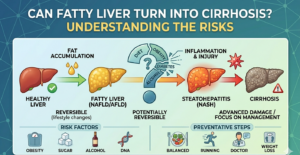
Understanding the Progression: From Fatty Liver to Cirrhosis
Fatty liver doesn’t become cirrhosis overnight.
The disease usually progresses through several stages.
Disease Progression Pathway
Fatty Liver
↓
Inflammation
↓
Fibrosis
↓
Advanced Fibrosis
↓
Cirrhosis
Each stage increases the risk of serious complications.
Stage 1: Fatty Liver
At this stage:
- Fat accumulates inside liver cells
- Liver function remains mostly normal
- Symptoms are often absent
Many patients discover the condition accidentally during:
- Ultrasound scans
- Routine blood tests
- Health checkups
Common Symptoms
Some people may experience:
- Fatigue
- Mild discomfort in the upper abdomen
- Feeling sluggish
- Difficulty losing weight
Most people experience no symptoms at all.
Reversibility
✅ Highly reversible
Lifestyle changes can significantly improve liver health.
Stage 2: Fatty Liver With Inflammation (Steatohepatitis)
Not everyone progresses to this stage.
When fat accumulation triggers inflammation:
- Liver cells begin to suffer damage
- Immune responses increase
- Healing becomes more difficult
This stage is called:
NASH (Non-Alcoholic Steatohepatitis)
or
Alcoholic Hepatitis
depending on the cause.
Why Inflammation Matters
Inflammation acts like a slow-burning fire.
Over time it:
- Injures liver tissue
- Kills liver cells
- Triggers scar formation
Persistent inflammation is the critical step that moves fatty liver toward cirrhosis.
Stage 3: Fibrosis
Fibrosis means scar tissue has started replacing healthy liver tissue.
What Happens?
When the liver repeatedly tries to repair damage:
- Collagen fibers accumulate
- Scar tissue develops
- Blood flow becomes restricted
The liver still functions reasonably well at this stage.
However, damage is becoming increasingly difficult to reverse.
Stage 4: Advanced Fibrosis
At this stage:
- Large portions of liver tissue are scarred
- Liver function begins declining
- Risk of cirrhosis rises significantly
Many patients remain symptom-free.
This is why regular screening is essential.
Stage 5: Cirrhosis
Cirrhosis represents severe, permanent liver scarring.
Healthy liver tissue is replaced by nodules and scar tissue.
The liver becomes:
- Harder
- Smaller
- Less functional
Blood flow through the liver becomes impaired.
Fatty Liver vs Cirrhosis Comparison
| Feature | Fatty Liver | Cirrhosis |
|---|---|---|
| Fat Accumulation | High | May be present |
| Inflammation | Mild or none | Severe |
| Scar Tissue | Minimal | Extensive |
| Liver Function | Usually normal | Significantly impaired |
| Symptoms | Often absent | Common |
| Reversible | Often yes | Usually no |
| Life-Threatening | Rare | Yes |
Can Everyone With Fatty Liver Develop Cirrhosis?
No.
Most people with fatty liver never develop cirrhosis.
However, some individuals face significantly higher risk.
The challenge is identifying who belongs to that higher-risk group.
Major Risk Factors for Progression
1. Obesity
Excess body fat increases liver fat accumulation.
Especially dangerous:
- Belly fat
- Visceral fat
These trigger chronic inflammation.
2. Type 2 Diabetes
Diabetes dramatically increases the risk of:
- NASH
- Fibrosis
- Cirrhosis
High blood sugar damages liver cells over time.
3. High Cholesterol
Abnormal cholesterol levels worsen liver inflammation and fat buildup.
4. Excess Alcohol Consumption
Alcohol acts as a direct liver toxin.
Combining alcohol with fatty liver significantly increases risk.
5. Sedentary Lifestyle
Lack of exercise contributes to:
- Weight gain
- Insulin resistance
- Increased liver fat
6. Smoking
Smoking increases oxidative stress and worsens liver injury.
7. Genetic Factors
Some individuals inherit genes that make them more vulnerable to liver damage.
High-Risk Groups
| Group | Risk Level |
|---|---|
| Healthy weight individuals | Low |
| Overweight adults | Moderate |
| Obese adults | High |
| People with diabetes | Very High |
| Heavy alcohol users | Very High |
| Obese diabetics | Extremely High |
How Long Does It Take for Fatty Liver to Become Cirrhosis?
There is no fixed timeline.
For some individuals:
- Progression may take 10–20 years.
For others:
- Severe disease may develop much faster.
Factors affecting progression include:
- Diet
- Alcohol intake
- Weight
- Genetics
- Diabetes control
- Exercise habits
Warning Signs That Fatty Liver Is Getting Worse
Early fatty liver rarely causes symptoms.
As damage progresses, symptoms become more noticeable.
Early Warning Signs
- Chronic fatigue
- Weakness
- Mild abdominal discomfort
- Poor concentration
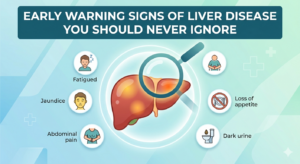
Advanced Warning Signs
- Yellow eyes or skin
- Swollen abdomen
- Leg swelling
- Easy bruising
- Dark urine
- Persistent itching
- Loss of muscle mass
Symptoms of Cirrhosis
When cirrhosis develops, symptoms may include:
- Severe fatigue
- Fluid accumulation in the abdomen
- Internal bleeding
- Confusion
- Weight loss
- Loss of appetite
- Sleep disturbances
The Silent Nature of Liver Disease
One dangerous fact:
Liver disease can progress for years without causing noticeable symptoms.
This is why people often discover cirrhosis unexpectedly.
By the time symptoms appear, substantial liver damage may already exist.
Good Habits vs Bad Habits
| Good Habits | Bad Habits |
|---|---|
| Regular exercise | Sedentary lifestyle |
| Weight management | Obesity |
| Healthy diet | Processed foods |
| Blood sugar control | Uncontrolled diabetes |
| Limited alcohol | Heavy drinking |
| Routine checkups | Ignoring symptoms |
How Doctors Diagnose Disease Progression
Several tests help assess liver damage.
Blood Tests
Doctors may check:
- ALT
- AST
- Bilirubin
- Albumin
Abnormal results may indicate liver injury.
Ultrasound
Can detect:
- Fat accumulation
- Enlarged liver
FibroScan
Measures liver stiffness.
Useful for detecting fibrosis and cirrhosis.
MRI
Provides detailed imaging of liver tissue.
Liver Biopsy
Sometimes considered the gold standard.
Can determine:
- Fat levels
- Inflammation
- Scarring
Understanding Fibrosis Scores
Doctors often classify fibrosis using stages.
| Fibrosis Stage | Meaning |
|---|---|
| F0 | No scarring |
| F1 | Mild scarring |
| F2 | Moderate scarring |
| F3 | Advanced scarring |
| F4 | Cirrhosis |
The goal is to detect disease before reaching F4.
Is Cirrhosis Reversible?
This is one of the most common questions.
Early Fatty Liver
✅ Often reversible
Early Fibrosis
⚠️ Sometimes reversible
Advanced Fibrosis
⚠️ Difficult but possible in some cases
Cirrhosis
❌ Usually permanent
However:
Treatment can slow or stop further damage.
Lifestyle Changes That Can Prevent Cirrhosis
Lose Excess Weight
Even modest weight loss helps.
Research suggests:
- 5% weight loss improves fatty liver
- 7–10% weight loss may reduce inflammation
Exercise Regularly
Aim for:
- 150 minutes weekly
Activities include:
- Walking
- Cycling
- Swimming
- Strength training
Control Blood Sugar
Proper diabetes management protects liver cells.
Reduce Alcohol Consumption
People with fatty liver should strongly consider avoiding alcohol.
Even moderate alcohol use may worsen progression.
Improve Diet Quality
Focus on:
Eat More
- Vegetables
- Fruits
- Whole grains
- Fish
- Nuts
Eat Less
- Sugary drinks
- Refined carbohydrates
- Fast food
- Fried foods
Liver-Friendly Foods
| Food | Benefit |
|---|---|
| Broccoli | Supports detoxification |
| Spinach | Rich in antioxidants |
| Berries | Reduce oxidative stress |
| Oats | Improve metabolism |
| Fish | Provides omega-3 fats |
| Olive oil | Supports healthy inflammation levels |
Foods That Increase Risk
| Food | Why It Matters |
|---|---|
| Soda | High sugar content |
| Processed snacks | Promote inflammation |
| Fast food | Excess calories |
| Sugary desserts | Increase liver fat |
| Excess alcohol | Direct liver toxicity |
Myth vs Reality
| Myth | Reality |
|---|---|
| Fatty liver is harmless | It can progress to cirrhosis |
| Only alcohol causes cirrhosis | Obesity and diabetes also contribute |
| No symptoms means no problem | Liver disease is often silent |
| Liver damage is always permanent | Early stages are often reversible |
| Supplements can cure fatty liver | Lifestyle changes remain most effective |
Frequently Asked Questions
Can fatty liver disappear completely?
Yes.
Early fatty liver often improves significantly with healthy lifestyle changes.
Does everyone with fatty liver develop cirrhosis?
No.
Only a subset of patients progress to advanced disease.
Is cirrhosis fatal?
It can be life-threatening if untreated.
However, early detection improves outcomes.
Can exercise reverse fatty liver?
Exercise can significantly reduce liver fat and improve overall liver health.
Is alcohol safe if I have fatty liver?
Most liver specialists recommend minimizing or avoiding alcohol entirely.
Expert Insight
“Fatty liver should never be dismissed as a minor condition. Early intervention offers the best opportunity to prevent irreversible liver damage.”
Key Takeaways
✔ Fatty liver is common but should not be ignored.
✔ Fat accumulation can trigger inflammation and scarring.
✔ Fibrosis is the bridge between fatty liver and cirrhosis.
✔ Obesity, diabetes, and alcohol significantly increase risk.
✔ Early stages are often reversible.
✔ Cirrhosis is usually permanent and can cause serious complications.
✔ Regular screening helps detect disease before symptoms appear.
✔ Healthy lifestyle choices remain the most effective treatment.
Conclusion
Fatty liver disease may seem harmless in its early stages, but it has the potential to progress into one of the most serious forms of liver damage: cirrhosis. The journey from fatty liver to cirrhosis is usually slow, often occurring over many years, which creates a valuable window of opportunity for prevention.
The encouraging news is that fatty liver is often reversible. Weight management, regular exercise, healthy eating, blood sugar control, and avoiding alcohol can dramatically reduce the risk of progression. The earlier these changes are made, the greater the chance of preserving liver function for life.
If you have been diagnosed with fatty liver disease, don’t panic—but don’t ignore it either. Taking action today can help prevent irreversible damage tomorrow and keep your liver healthy for years to come.